
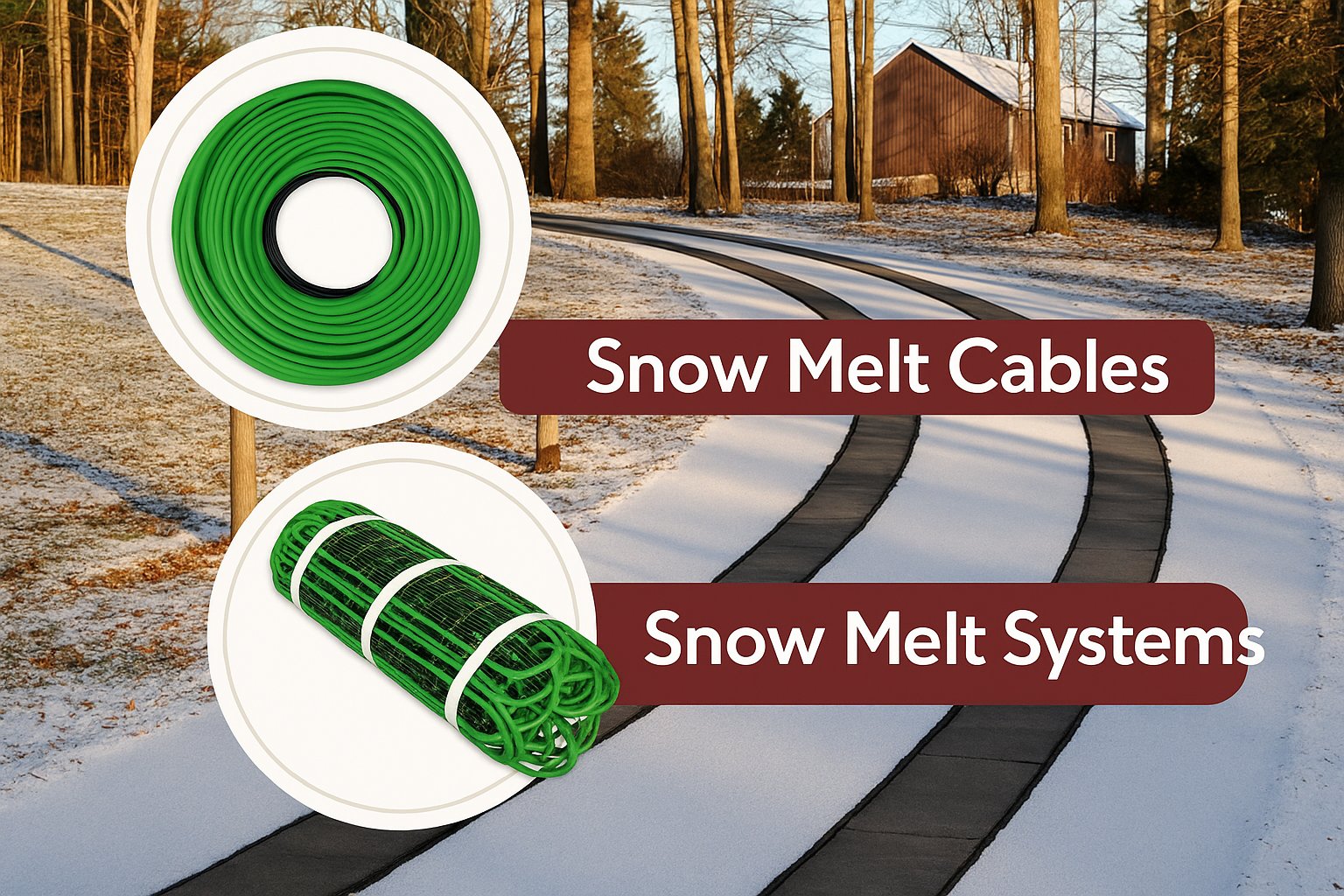
The main difference between snow melting mats and cables is that mats are pre-spaced on a mesh roll for fast installation on standard rectangular driveways, while loose cables offer maximum flexibility for custom shapes, curves, and stairs. Both provide the same heating power to melt snow and ice, and both are embedded in the driveway surface and activated automatically by a snow sensor controller.
Key Takeaways
- Best for standard shapes: Snow melting mats offer faster, simpler installation for rectangular driveways.
- Best for custom layouts: Snow melting cables provide maximum flexibility for curves, stairs, and irregular shapes.
- Cost comparison: Cables have a lower upfront material cost, while mats save money on installation labor.
- Automated operation: Both systems can be paired with a snow sensor to activate automatically when it snows.
Whether you want to eliminate snow shoveling, avoid harsh de-icing chemicals, or reduce liability from icy slips, both options provide reliable, automated snow removal. Read on to compare the benefits, costs, and installation differences between mats and cables so you can choose the right system for your home.
Quick Cost Facts
- Material Cost: Snow melting mats typically cost between $10 to $15 per square foot, while cables range from $6 to $10 per square foot.
- Operating Cost: A typical system costs about $0.12 to $0.25 per square foot to run for an entire snowstorm.
- Example Project: A 400 sq. ft. driveway using snow melting mats typically costs between $4,000 and $6,000 for the heating elements and controls (excluding the new driveway surface).
How to Choose Between Mats and Cables in 3 Steps
Step 1: Evaluate Your Driveway Shape
Determine if your driveway is a standard rectangle or if it has curves, angles, and custom shapes. Rectangular driveways are perfect for mats, while irregular shapes require cables.
Step 2: Consider Your Installation Timeline
If you need a fast installation, snow melting mats roll out quickly. If you have more time and want to save on material costs, cables are the better choice.
Step 3: Factor in the Surface Material
Both systems work under asphalt, concrete, and pavers. However, mats are generally preferred for standard paver layouts due to their uniform spacing, while cables are better for intricate paver patterns.
Mats vs. Cables: Side-by-Side Comparison
| Feature | Snow Melting Mats | Snow Melting Cables |
|---|---|---|
| Best Use Case | Standard driveways, straight walkways, rectangular patios | Curved walkways, custom driveways, stairs, irregular shapes |
| Installation Time | Fast (roll out and cut the mesh) | Slower (requires manual routing and spacing) |
| Material Cost | Slightly higher | Lower |
| Cost per Square Foot | $10 – $15 | $6 – $10 |
| Design Flexibility | Moderate (cut-and-turn mesh) | Maximum (free-form routing) |
| DIY Suitability | High (Pre-spaced, roll-out) | Moderate (Requires manual spacing) |
| Cable Spacing | Pre-spaced at 3 inches for consistent 50W/sq. ft. | Variable (can adjust spacing for 35W to 50W/sq. ft.) |
| Voltage Options | 120V, 240V | 120V, 240V, 208V, 277V |
| Compatible Surfaces | Asphalt, concrete, mortar under pavers | Asphalt, concrete, mortar under pavers |
How Much Do Snow Melting Mats and Cables Cost?
Heated driveway installation typically costs $8–$25 per square foot, depending on size, surface type, and system choice. For a detailed breakdown of expenses including labor and controls, see our guide on Heated Driveway Cost in 2026.
The cost of a snow melting system depends on the size of the area, the heating element chosen, and your local electricity rates. While cables have a lower upfront material cost, mats can save money on labor due to their faster installation time.
To get an exact price for your project, use our free Snow Melting Quote Builder. You can also estimate your running costs using our interactive calculator below:
Operating Cost Calculator for Snow Melting
Calculate driveway heating costs based on size, coverage type, and local energy rates.


"A snow melting system is the ultimate set-it-and-forget-it solution. No more shoveling, no more slipping—just safe, clear walkways and driveways whenever you need them!"
— Rae RadiantWhy Choose WarmlyYours for Your Snow Melting Project?
With over 25 years of experience and thousands of successful snow melting installations across North America, WarmlyYours provides industry-leading expertise and support. Our systems are backed by a 10-year warranty and 24/7 technical support to ensure your driveway stays clear all winter long.
Snow Melting Mats: Cut-and-Turn Format for Easy Installation
Snow-melting mats consist of heating cable embedded in mesh rolls, making them particularly fast and easy to install. The mats are simply rolled out, and the mesh is cut and turned as needed to fill the desired heating area. This option ensures proper spacing of the cable for even heating, as the cable is already set in an evenly spaced serpentine pattern according to the manufacturer’s specifications.
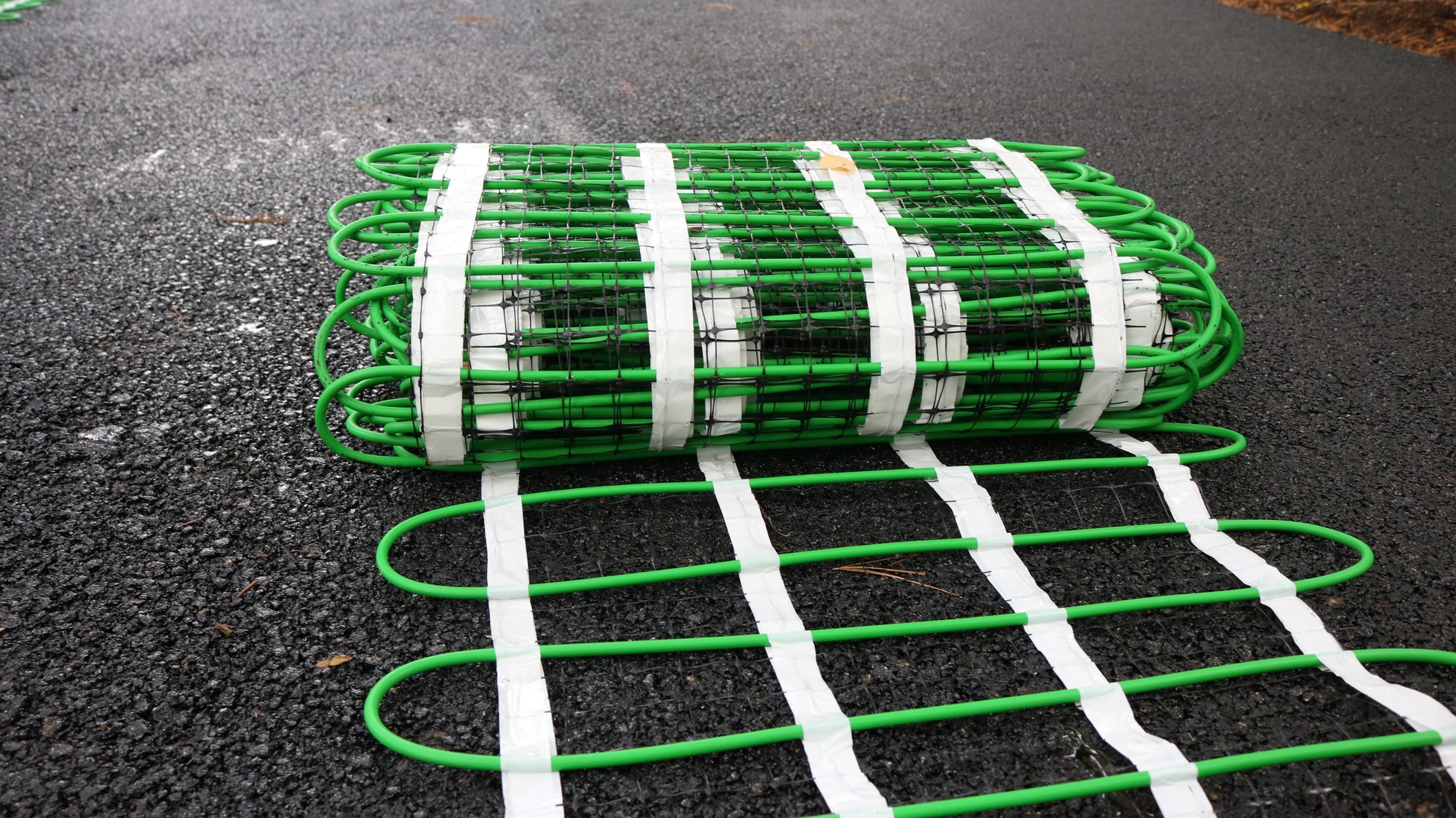
The rectangular shape of these heated driveway mats makes them a great option for square or rectangular projects, such as a simple driveway or walkway. However, their format proves to be a little more difficult to work with when the area is highly curved or irregular.
Snow Melting Cables: Maximum Flexibility at a Minimal Cost
Snow-melting cable is known for its flexibility. Whether you have a circular driveway, a long winding walkway, or outdoor stairs, cable can handle the job. It’s also the most affordable snow-melting option in terms of material cost. The downside is that installation takes longer and is more labor-intensive.
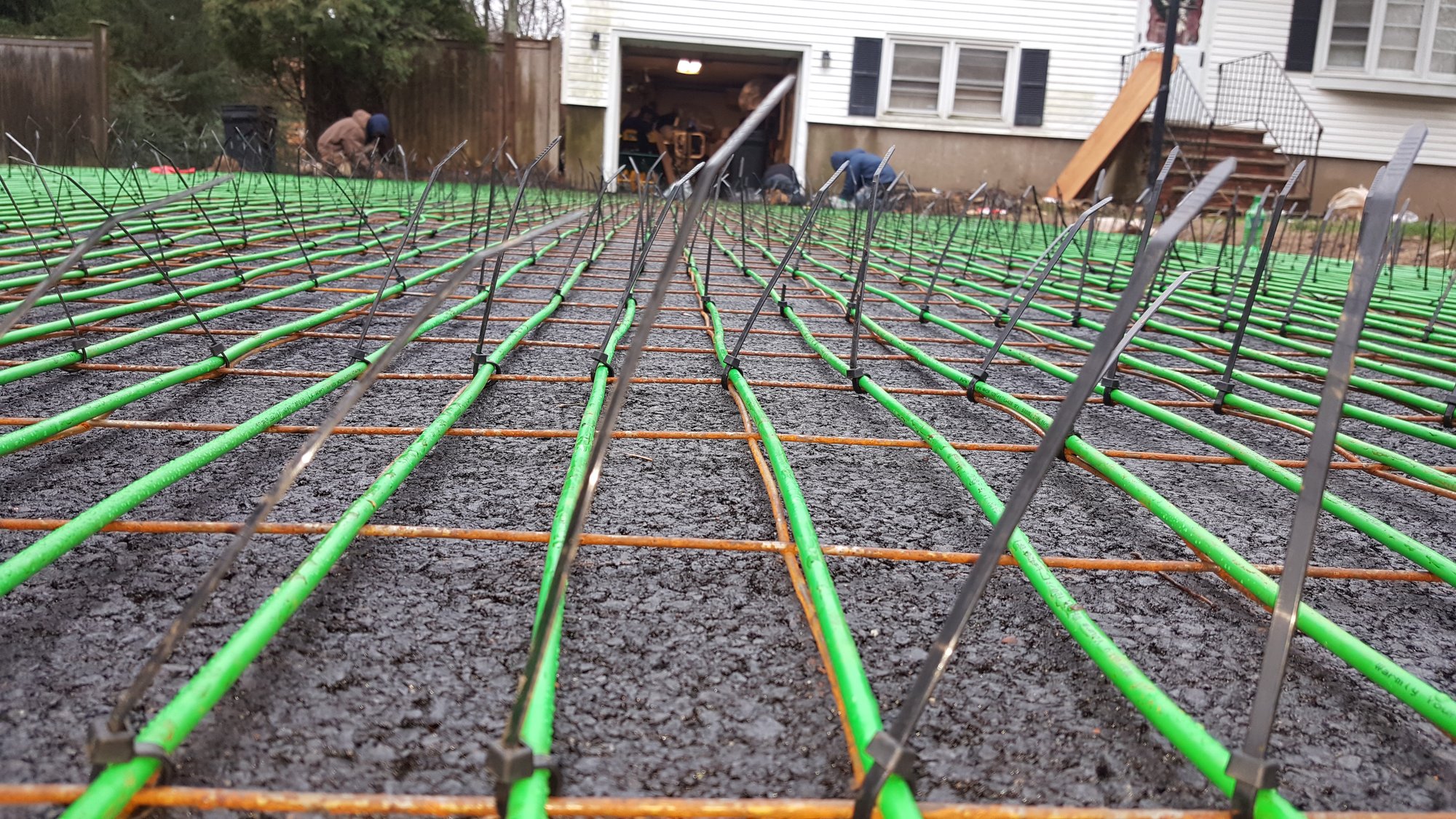
The flexibility of the cable also applies to its level of heat. Because the spacing is not pre-set, installers have the ability to vary the spacing of the cable to increase or decrease the wattage per square foot. Additionally, while both mats and cables are available in 120V and 240V, cables are also available in 208V and 277V for commercial applications. For larger residential projects, a 240 V snow melting cable is often the most efficient choice.
Shop by Voltage
Ensure compatibility with your home or commercial property's electrical supply by shopping our snow melting systems by voltage:
- 120V Snow Melting Systems (Standard residential)
- 208V Snow Melting Systems (Commercial)
- 240V Snow Melting Systems (High-output residential)
- 277V Snow Melting Systems (Heavy-duty commercial)
Which System Is Right for Your Project?
Standard Driveways
For simple, rectangular driveways, snow melting mats are the clear winner. Their pre-spaced design ensures consistent heat distribution and significantly reduces installation time. If you are planning a full replacement, check out our guide on How to Replace a Driveway: 4 Steps to a Heated Surface.
Irregular Driveways
If your driveway features curves, angles, or custom shapes, snow melting cables provide the flexibility needed to route around obstacles and follow unique contours perfectly.
Pavers
Both systems work well under pavers, but mats are generally preferred for standard paver layouts due to their uniform spacing. Cables are better if the paver design includes intricate patterns or tight borders.
Steep Driveways
Safety is paramount on inclines. A full-coverage system using either mats or cables is highly recommended to eliminate all slip hazards and ensure vehicles can safely navigate the slope.
Stairs
For outdoor stairs, snow melting cables are the best choice. They can be easily routed back and forth across each tread and transitioned smoothly to the next step.
Maintenance & Care
Once installed, both snow melting mats and cables require zero ongoing maintenance. Since there are no moving parts or fluids to leak, the systems are incredibly reliable. For more details on how to protect your investment, check out our maintenance and lifespan guide.
Frequently Asked Questions
As long as the ground isn’t frozen, you can have a snow-melting system installed on your property. This means you can generally have the work done in the spring, summer, or fall months before the first freeze.
To find a qualified contractor, check out WarmlyYours Radiant Heating’s Dealer/Installer Database. Plug in your zip code to search for local professionals and filter the results by "Supports Snow Melting."
Yes, most heated driveways are fully automated. By pairing your snow melting mats or cables with an automatic snow sensor, the system will detect falling snow and freezing temperatures, turning on automatically to prevent accumulation.
In most cases, snow melting systems must be installed during a new pour of concrete or asphalt, or when laying new pavers. However, you can retrofit an existing driveway by saw-cutting grooves for the heating cables and sealing them with hot asphalt or backer rod and sealant.
Snow melting mats feature heating cables pre-spaced on a mesh backing for fast, consistent installation in large, straight areas like driveways. Loose cables offer maximum flexibility for custom shapes, stairs, or tight curves. Both provide the same heating output, but mats reduce labor time while cables handle complex layouts.
For paver installations, snow melting mats are generally preferred because the pre-spaced mesh ensures even heating across large surfaces and simplifies the layout process. However, loose cables are better for heating the specific paths of stairs or custom-shaped landings leading to the driveway.
Professional installation for a heated driveway typically costs between $10 and $25 per square foot, including materials and labor. Total pricing varies based on the system type, the driveway material (asphalt, concrete, or pavers), and local electrical rates. Use our online calculator for a precise estimate.
We suggest using cable to heat stairs as it is easier to route between the separate stairs.
The right choice depends on your layout, timeline, and how custom the space is:
- Choose Snow Melt Mats when you want faster installation and consistent, evenly spaced heat in standard shapes (straight walkways, rectangular landings, simple patios). Mats are ideal when you’re prioritizing speed, simplicity, and uniform coverage.
Link: Snow Melt Mats - Choose Snow Melt Cables when your paver area has curves, tight turns, odd shapes, or lots of obstacles (posts, drains, steps, landscaping cutouts). Cables give you maximum design flexibility so you can match the heating layout to the exact paver pattern and footprint.
Link: Snow Melt Cables
Pro tip (especially for pavers): Before deciding, confirm your surface type and whether it’s a new install or a retrofit, then request a free SmartPlan so you get a custom layout, product recommendation, and electrical specs based on your exact dimensions.
Link: Free Snow Melting Installation Plan (SmartPlan)
For optimal performance, lay snow melting mats or cables on a compacted gravel base, then embed them in a 1.5 to 2-inch bed of sand or mortar. Ensure the heating elements are 2 to 3 inches below the finished surface. Do not use pavers thicker than 2.5 inches, as this reduces heat transfer efficiency.
The cost of the heating elements (mats or cables) typically ranges from $7 to $25 per square foot, depending on whether you choose flexible cables or easy-to-install mats.
Small Driveway (approx. 200 sq. ft.): Systems starting around $2,500 - $3,500 for full coverage.
Large Driveway (approx. 400+ sq. ft.): Full-coverage systems starting around $4,750+.
It is better to use snow melting mats for standard, rectangular driveways because their pre-spaced cables allow for fast, easy installation. However, for curved driveways, stairs, or custom shapes, snow melting cables are the better choice as they offer maximum design flexibility and lower material costs.
Ready to Get Started?
Don't spend another winter shoveling or worrying about icy slips. Whether you choose the fast installation of snow melting mats or the custom flexibility of cables, WarmlyYours has the perfect solution for your driveway.
Have Questions About Your Project?
Our team of Radiant Experts is ready to help!
Related Articles
5 Reasons Snow Melting Will Change Winter Forever
Snow Melting Systems for Steep Driveways: What Homeowners Need to Know
How to Plan for a Snow Melting System: 8 Things to Know Before You Get a Quote

Low Cost Snow Melting is the Answer to Snowy Saint Paul Winters
Stay Updated
Get the latest radiant heating news and tips delivered to your inbox.